Classes for Erasing Despair

Classes for erasing despair


“Many women are unable to overcome the crisis imposed by the situation in the country because they lack the minimum skills.” Haifa Ali


The mother’s tears were flowing as she complained to Haifa, the school principal, her financial situation, which had deteriorated after the war forcing her to take her son out of school. Haifa offered her work to help her family but the mother told her she had neither a certificate nor the skills needed to do any job. Haifa admitted the woman’s son as one of 25 students studying free of charge in her school. After this, she decided to open literacy and handicraft classes to help housewives acquire skills that would help them in their careers.

Haifa grew up in a conservative family in which girls do not usually complete their education. But her aunt stood with her during all stages of her education until she graduated from the university’s department of sociology and began working as a social worker. Through her work she witnessed difficult cases in the community that she was not familiar with, and these experiences helped bring her closer to the suffering of others.

Years later, she decided to establish a private school, which continued to work until the war started, when the salaries of the staff were stopped and many of the parents withdrew their children from school.

Haifa decided to use the evening period to open free classes at her school and to hold courses in literacy, sewing, engraving, recycling, handicrafts, secretarial skills, antiques and making gifts. She hired volunteer instructors, and others, whose wages were paid from donations.


Firewall

Firewall

“When a woman enters any area for the first time, she bears the burden of the first step, and stands as the first wall of defence against shocks.” Nadia Al-Khulaifi


Nadia strode with confidence down the corridor of the court. Eyes watched her with mixed emotions: astonishment, contempt, respect, ridicule. She was the first woman in northern Yemen to break into the legal profession in a male-dominated society. She was a lawyer defending a girl accused of killing a man who had raped her.

Nadia did not only face society’s hostile attitude, but she had also to face the discrimination of her colleagues and bosses in the profession, who were the first to fight her when many of them refused to accept her training to practice law after she graduated from university in the eighties. She was denied the lawyer’s card by the authorities, except after the unification of Yemen, ten years after she graduated.

Only one judge encouraged her to get into this area of work. He encouraged others to respect her, while other judges underestimated her for being a woman. One of them didn’t even have the minimum educational qualifications for practicing as a judge, while she held a university degree as well as abundant abilities, skill, courage and humanity.

Nadia stood in the Court of Appeal. She checked her papers quickly, then stepped forward and straightened up confidently. Three years had passed since she started practicing law, during which she gained the courage and resolve to stand firmly to defend a wronged child and the rights of maltreated women. Yemen is a country that defends the offender when it comes to the honour of women, even if they are victims.

“Your Honour,” Nadia started her appeal. “This victim, who you put in the cage of the accused, is a girl who is just 13 years old. She has been raped and her rapist attempted to kill her. Is she imprisoned just because she defended herself, her honour, and her life? Before all that, she’s just a child, sir. Are children to be tried?”

“If she had not been a child she would have been sentenced to death, without trial or appeal,” said the judge harshly.

At the beginning of her career, her fellow lawyers did not want her to work with them. Nadia was shocked by the realisation that most men who defended the rights of women were the most likely to succumb to customs and traditions, and to fight women when they were strong and competed with them in their work.

“Do you kill a woman who defended her honour?” Nadia asked the lawyer of the accuser.

“Tell me where her parents are,” the lawyer asked her looking at the empty chairs. “Why did they not come today? They know she is an offender, she has brought shame on her family.”

“The girl you’re talking about, sir, was raped, as was confirmed by witness testimony, and was stabbed by her rapist, who tried to kill her. She defended herself. And now she became a criminal murderer only because she stands alone behind bars, because community customs and norms criminalise her, because she is a female?” she concluded.


For Whom Ring the Bells?

For Whom Ring the Bells?

“I hope Yemeni women get their rights fairly.” Fatima Fakhir


Fatima the school principal listened quietly to the teacher who spoke to her with sadness and emotion as she held back her tears. She was the ninth teacher to leave teaching due to the suspension of salaries because of the war in Yemen.

“Forgive me, but I cannot continue without pay,” the teacher said shyly. “You know the cost of transportation, and the difficult financial situation after our salaries were cut off. The grocer refused to lend me the bus fare today.”

“It’s ok,” said Fatima, “I appreciate your position well. If only I could do something, but this is war.”

“I know that well,” replied the teacher. “You’re always with us, but I can’t continue.”

At the beginning of the war Fatima’s school was transformed into a camp for displaced people. As a result, teaching stopped for months. She made an effort and pursued the responsible authorities to bring her students back to their classrooms and transfer the displaced to their camps.

Fatima runs a school in Bani al-Harith, far from the centre of the capital Sana’a, where 2000 girl students study, including least 400 displaced and orphaned girls whose interruption of their education will add new suffering to their lives in this seemingly endless crisis.

Fatima ran her first school in the mid-1980s and resisted discrimination against Yemeni female teachers in favour of Arab female teachers from neighbouring countries. She remembers when a parent paid a taxi fare for an Egyptian female teacher and ignored her Yemeni counterpart sitting next to her. “You are from the country,” he explained. From that day Fatima decided to support the daughters of her country to gain confidence and appreciation, and to give them the opportunity to prove their competence.

Today, she sees their dreams fall down like the leaves of trees being cut off. Fatima decided to find a solution to the teachers’ salary crisis. She contacted some traders and businessmen to request whatever they can offer to help teachers to continue working. She began looking for resources to bring teachers back to school. One merchant donated some food baskets to teachers each month; another businessman offered a monthly amount of money to cover the cost of transport; another offered a monthly amount to cover basic salaries of some teachers; a pharmacist offered to provide them with medicine.

Fatima looked happily out of the window of her office, at the students who were playing in the school yard after school had resumed. But she noticed some poor girl students sitting on the edge of the yard, looking sadly at others. She approached one of them and asked her why she wasn’t playing with the others. “I’m hungry,” the girl said. This shocked Fatima, and she went about looking for some food to feed these hungry students. With her extensive relationships, distinctive style and determination to achieve her goal, Fatima convinced other donors to serve breakfast free of charge for school students, teachers and janitors.

Some weeks later, one morning with a happy smile Fatima watched the students as they performed the morning greeting and continued with their education.


The Painting

The Painting

“I cannot live without voluntary work. Without it, I feel that I am dependent on society.” Sarah El Jahmi


“I will make him speak,” Sarah said to herself as she was thinking of J. “I will try this time to make him speak.”


At the age of eight J lost his mother in an aerial bombardment. He saw her limbs fly through the air in front of him, and the severe shock rendered him speechless. When Sarah met him at a camp for displaced people in Sana’a in 2016 during her voluntary work, she decided to bring his life and childhood back to him.

Sarah lived for several years in Ta’iz, after fleeing with her family from Rada’a because of the deteriorating security situation. When the war began in 2015 the family left their home when the tanks came close to where they lived. Sarah became a displaced woman, seeing with her own eyes the suffering of the displaced people and their ordeals, which she had experienced in the very poor camp, where her family could not stay for one day and left Ta’iz for Sana’a.

Sarah took a last look from the window of the crowded car, on the streets of the city where she had lived her teenage years, seeing it disintegrate before her eyes. The family returned to the countryside in Rada’a to live a life of luxury. But Sarah couldn’t bear staying without work, without volunteering.

Sarah decided to look for opportunities for volunteering in Sana’a, to which a large number of displaced people have arrived from other war-ridden provinces. She tried to settle there, where many camps for displaced people were erected, and where she could contribute. Despite her male relatives’ opposition to her move with her mother and brothers, she insisted on achieving her goal. She equipped a small place to live in with her family in Sana’a.

There she worked with a civil society organisation, and shortly after that, founded her association “We Can,” which provided community volunteering activities, participated in relief campaigns, assisted displaced people, providing them with food and health needs, and facilitated their access to basic life requirements. She received financial support for her association from some of her family living abroad.

Sarah ran several volunteering projects, to assist displaced people affected by the war. One such project was called “Iqra’ni” (“Read Me”), where displaced people in the Sunainah neighbourhood of Sana’a were taught to read and write. In addition, they were provided with food and clothing.

The first project, in which Sarah participated as a volunteer was in 2016 and was called “Child of Peace.” It targeted 50 children, displaced from war-affected provinces such as Sa’ada and Ta’iz. They were selected from IDP camps housed in some schools in Sana’a. The idea of ​​the project was to help children to stand in front of the public on stage and to talk about the stories of their displacement and suffering. The aim was to help children to speak easily about their experiences to help them psychologically to overcome them.

Sarah found moving stories in this project. She and her team adopted a child whose family house had collapsed in the war. He kept gathering his parents’ limbs and body parts from under the rubble. The man who found this child told her two years later that their care for the child is evidence of the real footprint their project leaves on the ground. Indeed, many call her the “Mother of the Poor” for caring for several children who have lost their parents.

J was Sarah’s most difficult story in this project. After days of anxiety and attempts to deal with him, and after hours of reading and looking for a treatment for such cases, suddenly Sarah ran out of her office with a look of joy on her face. Without waiting for anyone, she went to a nearby library and returned to the camps.

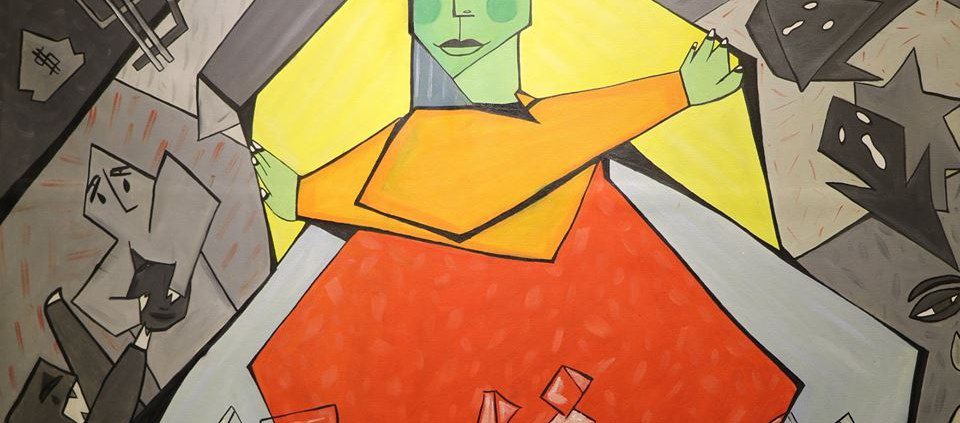
Sarah put the crayons quietly on the table in front of the boy. She opened the sketchbook and put the colours in his hand. Minutes later the little hand moved, drawing lines and curves, blood, and the mother who, once again, was scattered in front of him. An hour later, when he had finished his drawing, he looked at Sarah’s face, which was covered in tears, and spoke to her for the first time: “They did this to my mother,” he said.


The Lonely Dead

The Lonely Dead

“It hurts me to see the piling up of corpses in hospital morgues. I must do something to restore their dignity.” Suad Al Maghraby


Suad adjusts the lens of the camera. The lighting is good, but she does not ask the person lying down before her to smile, because he can’t – he is dead.

While working at the Ministry of Interior at the beginning of her career, Suad was tasked with uncovering bodies, photographing and collecting information about them, reporting their cases, and then posting adverts about them in the national newspapers in order for their relatives to identify their bodies before permits could be issued to allow them to be buried.

Suad had been working in criminal investigation for twenty-seven years and had been tormented over the years by the scenes of so many bodies stacked in morgues. So she worked, with exceptional diligence, to get bodies buried, even if this meant working outside official working hours. She provided information on unidentified bodies, obtained permits and sorted out burial costs.

Some cases required a full year to obtain permits and to follow the procedures, such as getting forensic reports, prosecution permits and other necessary papers, publication of adverts in newspapers, and awaiting for the appearance of relatives of the dead. All this took a long time, but Suad worked patiently.

When the war broke out in 2015, the situation deteriorated because power outages affected the cold chambers. The economic collapse led some to leave the bodies of their relatives for months because they could not afford the costs of burial, or because hospitals, where patients had died, refused to hand over their bodies before they were reimbursed for the treatment costs which the families couldn’t afford. So Suad had to get funds from donors to release the corpses.

Suad was not looking for money only, but also sometimes for graves from donors. For example, years ago, a benefactor donated half a cemetery in which Christians could be buried, when all graveyards refused to bury them for religious reasons. She also stood with the residents of a neighbourhood in the face of some parties who tried to annex a cemetery to their property. She paid, from her income, the cost of fencing the cemetery to protect it.

One body Suad had to take a photo of was the body of a young child found dumped in a street garbage bin. These children do not get buried easily, because investigations last long, leaving them in morgues for long periods of time. During the war, hospitals became overwhelmed with bodies. Three bodies were piled on each morgue cabinet or bed. Suad pondered the fate of the poor child – where would they ditch his little body?

She held the camera, adjusted the lens, made sure the lighting was right, smiled tenderly, and took – for the child with closed eyes – his last shot.


Behind Bars

Behind Bars

“I believe that civil society organisations will work to bring peace to Yemen.” Laila Al Thawr

Laila was a housewife living a normal stable life until 2011, when the youth revolution took place. She saw from the window of her house, overlooking the sit-in squares, all that was going on outside. She decided at that moment to work with civil society organisations, to help change the political situation in Yemen. She began working in the political and social arenas to establish an alliance that brings together civil society organisations to work together under one roof to achieve their goal. But things do not always unfold as they should do.

After the war erupted in 2015, Laila had established an organisation for the defence of rights and freedoms, when a child approached her with a request that completely changed her course. The child, who had been detained in Aden, asked her to help him to release his friend, who was still in detention.

Laila took this on as a personal case and decided to look for the child held by groups in the South, where she faced complex networks. She realised the magnitude of the tragedy experienced by a large number of detainees of all parties. She negotiated with everyone in her capacity as director of her organisation.

Laila did not listen to those voices which belittled her ability to free this detained child because of the complexity of the situation and the difficulty of negotiating with conflict parties. Instead she surprised everyone with her resolve. She came back with a comprehensive prisoner exchange agreement with the leader of the organisation that had detained the child. From then on Laila had the trust of all parties and worked to free prisoners from both sides.

Unfortunately, in one of the deals the location of the of the exchange was revealed, and an extremist group attacked the exchange with shelling. Rumours spread that negotiations had failed, proliferating a wave of despair and frustration among detainees that pushed some of them to try to end their lives, while others went on hunger strike. This led Laila to re-double her efforts. She contacted the detainees to calm them down and called upon them to stop the strike, pledging to get them out of detention. In the end all were released, thanks to her efforts.

Laila then returned to look for other prisoners, not only to give them hope, but to give them freedom too. Her efforts have contributed to freeing 4000 detainees since the beginning of the war.


Cries Not Heard

Cries Not Heard

“I hope Yemeni women will get justice, independence and non-discrimination.” Buthaina Al-Qirshi


Buthaina worked as a broadcaster and human rights activist concerned with women and children. After graduating, she lived alone in Sana’a city. Buthaina remembers her mother’s call at the time – she was blamed for staying alone, a blame reflecting the objections of the male members of her family. But she asked her family to trust her.

Buthaina smiles as she remembers the phase in her life when she was discovering the world, discovering herself, and living as an independent woman to prove to herself and to others that women are strong and can rely on themselves in the face of difficult circumstances.

After graduating, Buthaina worked in media as a children’s programme presenter. Through her work she became aware of the issues of abused children and gender-based violence. She attended training courses on children’s issues and became familiar with cases of early marriage and dropout from schools. The idea of defending their rights began to take a more coherent form in the course of her life.

Buthaina got married and moved to the city centre, but she continued to visit her home on the outskirts of Sana’a. She used to spend a few days each week at this house, trying to make friends with local women. At first, they did not accept the presence of a strange woman from the city, but she kept inviting them to her home to listen to their stories.

During one of these women’s gatherings, the doorbell rang. A woman came in with her child and revealed that she had been stabbed in the waist – both she and her child had been subjected to violence by her husband. Buthaina listened to her story with astonishment, and sought to deal with her problem through the judicial system. She contacted to her friends and activists in the field of women’s rights, with whom she had established good relationships while working in the media. In the end they managed to save the woman and her child from their ordeal.

This incident was a turning point in Buthaina’s life. She decided to start helping women to solve their legal problems, but she did not receive the cooperation of the competent authorities. They always asked her: “In what capacity are you making this complaint?”

She established a civil society organisation that would enable her to defend women and children officially. She dedicated her house, which she had built herself, to this cause as a headquarters from which she worked to help women and children affected by violence.

She opened the rooms of her house to her foundation as classrooms for teaching literacy, sewing, embroidery and computer instruction; helping girls and women to learn crafts and skills that would help them start their own small businesses – more than 600 women have benefited from these training courses. She also worked legally to help those women affected by the war, and stood with them through their various issues.

Buthaina noticed the high rate of girls’ drop out from school at early ages so she hired a group of girls to work in her institution in exchange for paying for their studies. One of its employees completed her dental studies with the support of the foundation and is now a successful dentist employed by the biggest hospitals.

One day a woman entered Buthaina’s office and asked her to accompany her to reclaim the bodies of her sons who had been killed in armed clashes. Buthaina’s foundation was the only humanitarian organisation that had remained open after the closure of most institutions and organisations because of the battles and armed clashes in the area.

Buthaina accompanied her until they were surrounded by fighters who did not allow women to enter their area. So the two women used their words to make peace temporarily, so that they could bury the dead and end the fighting in this area. The two women stood shoulder to shoulder with only their words , facing the guns which were pointed at them. They negotiated until the men allowed the mothers and wives of the dead to enter the area to bring out the bodies of their dead loved ones.

Buthaina had been a well-known Yemeni broadcaster. She no longer holds the microphone, but she still uses her voice – to fight for the rights of women and children.


A School Without Walls

A School Without Walls

“Knowledge is a great source of power for women.” Ferial Magdy


In just ten minutes Ferial had to make up her mind to leave her home city of Ta’iz as the sound of shells came closer. After ten minutes she was sitting in a car heading to the unknown with no idea of where to go. When she heard that a daughter of a relative of hers outside ​​Ta’iz had died, she decided to pay her a visit to console her.

Her relative was a secondary school teacher. Ferial stayed with her to console her over the loss of her daughter. When school exams approached Ferial decided to help teach the students, who her relative could not teach in this situation. After the exams were over, Ferial decided to do something to help displaced people like herself – students and young people of the village to which she had been destined to come.

She asked a friend to help her to start a voluntary project. During that summer holiday, with the help of her friend as well as local community members, she organised voluntary education activities in a summer youth centre. Volunteers delivered various classes in English and other subjects. She convinced village elders to support the initiative and the opening of a small school to teach 1000 children. The war had stopped education in Ta’iz and caused a bleak vacuum in the lives of young people who decided to volunteer to serve the community. They made a tangible change in their surroundings, and the lives of the children – developing their skills and distracting them from thinking about the war.

Months after she started this work, Ferial noted a rift in society with regionalism emerging strongly between villagers and displaced people from other areas. She felt she had to do something so she created the slogan of ‘coexistence’, taking care to include beneficiaries from all regions in the initiative, and bring them closer.

A few days later, an audience sat down to attend an event organised by Ferial: a silent play. The theme of the play was coexistence and acceptance of others. When the curtain came down, there was a long applause. But the curtain was also drawn on an episode of Ferial’s life: the shells of war and aerial bombardment reached her safe haven that was no longer safe, so she had to move once again, leaving Ta’iz, and fleeing to Sana’a.

In Sana’a, which was calmer than the conflict zones of Ta’iz, Ferial became absorbed in online cultural pages. She resumed her literary passion, remembering the morning poetry reading events that she used to organise as a teacher. The idea of ​​organising a new volunteer activity, arising from her love of culture, reading and literature, appealed to her.

She decided to set up a women’s literary forum to discuss books, present success stories of distinctive women role models, and host female literary figures to present evening and morning poetry and story readings.

The forum, which started as an online virtual activity run by Yemeni girls living in several countries, was turned by Ferial into a real life activity, a salon for women in Sana’a called ‘Salon Noon.’ It’s variety of cultural activities and events, such as the campaign to return to the love of knowledge and the celebration of International Women’s Day and the Colours of Joy.

The monthly activities of the salon included hosting Yemeni women writers and literary figures to talk about their experiences and hold literary and cultural evenings. Salon activities also included discussions of selected books, and other discussion topics and sessions, providing a variety of activities from time to time.

Ferial believes that knowledge, reading and teaching are the lifelines that saved her, and allowed her in turn to save others.


Peace Messages

Peace Messages

“There will be no comprehensive peace if there is no peace at the community level.” Sumaya Al Hossam


The poor old woman welcomed Sumaya with a piece of dry bread – Sumaya knew that the woman did not have anything else. Sumaya was visiting this remote village as a social worker for the Social Fund of Development. The old woman looked at her with an embarrassed smile as Sumaya put the piece of bread in her mouth and chewed it despite its hardness, then smiled back gratefully at the only woman who had this as her only daily food.

Sumaya heard stories of women in these isolated villages, and decided to do something to save them, and to help them, to improve their living conditions, determined to stand by them as they faced violence, persecution and denial of their rights.

Sumaya was born and lived in Hajjah province. She studied law in Sana’a, despite the traditions of her conservative family, who objected to her moving to student housing far from her village. But she managed, in her distinctive style, which later on helped her to become a lawyer, to convince them to give her this chance, which would enable her to defend the rights of children and women, and to work to achieve the justice she dreamt of.

After graduating from university Sumaya joined training courses in the field of human rights and peace making. She worked as a researcher and consultant with the Social Fund for Development, visiting remote areas to help women there, and to communicate their issues and problems to those responsible. Sumaya wanted to use more effective ways to convey women’s voice, so she ran for parliamentary elections for membership of the House of Representatives in her constituency. She was first woman to engage in such an encounter in the conservative province of Hajjah. However, the events of 2011 stopped the elections.

Sumaya joined the National Dialogue Conference in 2014 and began to think about extending the limits of her ambition to achieve peace in Yemen. But the 2015 war stopped the National Dialogue, so she decided to fight her battle directly from her platform, without waiting for an official post to help her out.

There had been battles of vengeance between two tribes in the province of Hajjah since 2002, with many parties attempting to intermediate between them for fifteen years, to no avail. Many people had been killed or wounded.

Sumaya believed that ending this small war would solve many similar issues, and could perhaps be a first step to ending the war that had taken hold of her country. So she decided to contribute to efforts the end it. She learnt the detailed history of these battles in full; she got in touch with specialists from the Ministry of Justice to become familiar the legal aspects of these issues; she talked to local people in the region to know what was happening; she learnt the stories of the victims who were killed from both sides because of revenge, and counter revenge.

Sumaya got in touch with former mediators between the parties to the conflict and contacted 50 people from both sides. She then began to open the lines of communication between them, invoking the desire of all to achieve peace.

In 2015 Sumaya began to send phone messages to 100 people from the two conflicting tribes. The messages, from this woman they did not know, continued for nine months, calling for peace. She contacted politicians and national decision makers and put the issue on the negotiating table, once again.

One year and two months later, after the start of her reconciliation efforts, the warriors of the two sides shook hands. In 2016, after fourteen years of fighting, peace was restored between the two tribes, with both parties deciding to put their weapon away.

Sumaya is currently working on programmes that engage women in peacemaking processes as intermediaries. Not merely a defender of rights by raising awareness, she believes in women’s ability to make peace because of human perception, in which she believes women are superior to men.


On Low Heat

On Low Heat

“The self-education of women is the secret to their success.” Hanaa A’sda


Hanaa completed her undergraduate studies in the field of small enterprise industry, and was thinking about what project she could undertake. She had always believed that women should not just study in universities, but should also develop their abilities and have their own ventures.

Once day she was cooking at home. She opened the oven and inhaled the aroma of delicious delicacies that she was skilled at making. The idea of the oven struck her as she was thinking of what kind of project she could run – she was good at baking and making cakes, sweets and pastries, so she decided to use the simple means available to her to build her own small business. She used the courtyard of her family home to build and equip a confectionery bakery.

Supported and encouraged by her family, who stood by her side, Hanaa started her small bakery in 2015 and began making and selling its products to acquaintances and neighbours, who placed orders over the phone. She hired a worker to deliver these products made on demand. Then she decided to expand the project. She made agreements with neighbouring shop owners to sell her products in return for a small fee. Thus she was able to help her family who had lost their income as a result of the war.

Not only did Hanaa help her family, but when the name of her bakery (Henno Secrets) spread, she decided to help girls who wanted to learn the craft and the secrets of her distinctive recipes. At a time when everyone was looking for any job opportunity, Hanaa was aware of the importance of training which opens up opportunities for women, enabling them to start their own projects. For a small fee she provided training courses for those girls who were keen to learn. Those who could not afford the fee were trained free of charge. She trained more than 100 girls and provided work for them at her bakery until they could find other job opportunities.

Some of them stopped working for her, for family reasons, because their families prevented them from working in the bakery, while others decided to start their own businesses, at home, sell their products at bazaars, or receive small orders. Hana stood by them and gave them support and advice to run their own businesses.

As demand for bakery products increased, more workers were hired to cope with catering needs for hospitality orders at private and public occasions, and facilitate participation in events and functions held by official bodies in Sana’a. In addition, she organised training workshops in various locations, and recently signed a contract with an international organisation to prepare a training course for making pastries and sweets, within a project targeting the Yemeni countryside.

Hana believes that women in wartime bear a great burden and responsibility. Many of them are forced to go out to work (some for the first time), to meet the needs of their families and households. Many women have become, with patience and perseverance, the main earners for their homes.